


The image of an architect hunched over a drafting table with a parallel bar and a set of rapidograph pens is rapidly becoming a historical relic. While the core principles of design—form, function, and aesthetics—remain timeless, the tools used to realize them have undergone a radical transformation. For undergraduate students entering the field today, technical proficiency is no longer an “added bonus” on a resume; it is the very foundation upon which a modern career is built. In a world where buildings are “grown” in virtual environments before a single brick is laid, the architect must be as much a data scientist as they are an artist.
The shift from manual drafting to sophisticated digital modeling has bridged the gap between imagination and execution. However, this transition brings a heavy academic load that many undergraduates find daunting. Students are now required to master complex structural geometry while simultaneously learning the backend logic of high-end software. When the pressure of learning these dual disciplines becomes overwhelming, many students find that consulting a professional assignment help allows them to maintain their grades while they dedicate more hours to the studio. Balancing the artistic side of architecture with the technical requirements of modern education is the first major hurdle of the degree, and it requires a strategic approach to time management.
The Evolution of the Architectural Toolset
Architecture has always been at the mercy of technology. From the invention of the arch in ancient Rome to the development of reinforced concrete in the industrial era, every leap in building capability has been preceded by a leap in technical understanding. Today, that leap is digital. We are no longer drawing lines that represent walls; we are programming objects that contain data about material, cost, thermal performance, and structural integrity.
| Era | Primary Tool | Skill Requirement | Impact on Workflow |
| Traditional | T-Squares & Ink | Manual Precision | Slow, linear, and difficult to edit. |
| CAD Era | 2D Software | Basic Computer Logic | Faster drafting, but lacked depth data. |
| Modern (BIM) | 3D Data Modeling | IT Literacy & Systems | Collaborative, data-rich, and complex. |
| Future | AI & Generative | Algorithmic Thinking | Automated optimization and high-speed design. |
As shown in the table above, we have moved into an era where a building is no longer just a drawing; it is a database. Building Information Modeling (BIM) requires students to understand how data flows between different departments—structural, electrical, and plumbing. This is where IT literacy becomes critical. If the data is managed poorly at the start, the entire project can collapse in the virtual world before it ever reaches the construction site.
Why IT Management is the Core of Design
Modern architecture firms operate more like tech hubs than traditional art galleries. A single project can generate terabytes of data that must be synced across global teams in real-time. If an architecture student doesn’t understand the basics of file management, cloud synchronization, and software interoperability, the most beautiful design in the world will fail to leave the computer. This shift means that “Information Technology” is no longer a separate department; it is the environment in which architecture lives.
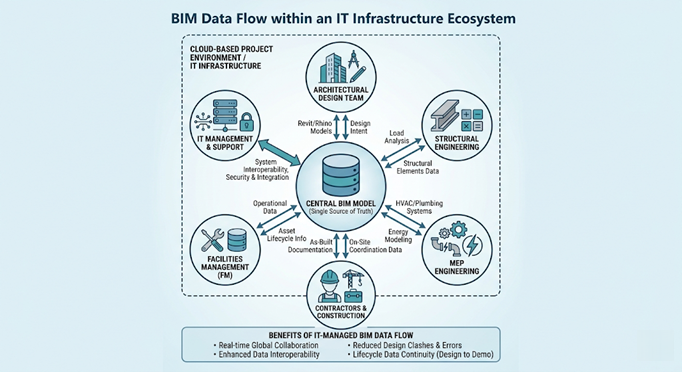
This technical demand is why curricula worldwide are changing. Students are now dealing with server-side issues, software crashes, and data corruption alongside their design theories. Understanding the infrastructure of these programs is vital for survival in the industry. For those struggling with the technical side of these modules, seeking management assignment help through MyAssignmentHelp can provide the necessary clarity on how systems integration works within the professional world. Having a grasp of IT infrastructure ensures that your design process is never interrupted by technical bottlenecks, allowing the creative flow to remain the priority.
The Components of Modern Literacy
There is a common misconception among undergraduates that being “good at computers” means you can navigate social media or edit a photo. In the architectural profession, IT literacy means something far more specific and rigorous. It involves:
- Parametric Design: This is the use of algorithms and sequences to define shapes and structures. Instead of drawing a curve, you write a logic that generates the curve. This allows for thousands of variations to be tested in seconds.
- Rendering Engines: Students must understand how hardware (GPUs) interacts with software to simulate light, shadow, and texture. This requires a deep knowledge of how computers process visual data.
- Data Security and Cloud Collaboration: Architecture is a collaborative field. Students must learn how to work within shared digital “central files” where multiple people edit the same model simultaneously.
When a student masters these IT-centric skills, they stop being a “user” of software and start being a “director” of technology. This distinction is what separates a junior drafter from a lead architect in the 21st century.
Navigating the Academic Workload
The curriculum for an architecture degree is notoriously grueling. It is one of the few majors that demands both high-level mathematical accuracy and extreme creative output. Because the learning curve for software like Revit, Rhino, and Grasshopper is so steep, many students find themselves spending twenty hours a week just troubleshooting software issues instead of actually designing. This “technical tax” can lead to burnout if not managed properly.
To stay ahead, students must adopt a “Global Tone” in their work—understanding that their designs and their technical documentation must be readable by contractors, engineers, and clients anywhere in the world. This requires a level of professional polish that takes years to develop. Using external academic support for theoretical essays or technical reports can free up the mental space required to master these complex digital tools.
The Impact of AI and Automation by 2026
As we look toward the 2026 industry standards, AI-integrated learning is becoming the norm. We are seeing tools that can generate floor plans based on a set of parameters or optimize a building’s energy efficiency in seconds. An architect who lacks IT literacy will be replaced by these tools; an architect who is IT-literate will lead them.
IT literacy allows you to “speak” the language of the machine. It allows you to troubleshoot when the AI produces a structural impossibility and to customize scripts to create forms that have never been seen before. This is the “Information Gain” that modern firms are looking for. They don’t just want someone who can use a tool; they want someone who understands how the tool works and how to fix it when it breaks.
The Importance of Systems Thinking
At its heart, architecture is about systems. A building is a system of structure, a system of air, and a system of human movement. Digital literacy teaches students “systems thinking.” When you learn how a computer manages data, you are learning how to manage the complex systems of a skyscraper.
Undergraduate students who take the time to learn the “boring” side of IT—such as database management, version control, and system hardware requirements—often find that their design work becomes more structured and logical. They are able to defend their creative choices with hard data, which is a powerful skill when presenting to professors or future clients.
Conclusion: The Future is Interdisciplinary
The walls between the “IT professional” and the “Architect” are crumbling. To succeed as an undergraduate today, you must embrace the digital nature of the industry. You are building more than structures; you are building digital ecosystems that will eventually become physical reality. By leveraging professional academic support and focusing on your technical literacy, you position yourself at the forefront of the next architectural revolution. The blueprint of the future is not drawn in lead; it is written in code.
Frequently Asked Questions (FAQ)
Q1: Do I need to learn coding to be a successful architect?
Ans: While you don’t need to be a software engineer, understanding the logic behind coding (like Python or C#) is becoming a massive advantage. It allows you to create custom tools in programs like Grasshopper that standard users can’t access.
Q2: Why is my software always crashing during my studio projects?
Ans: This is often an IT management issue. Large architectural files require specific RAM and GPU configurations. Learning how to optimize your files and manage your hardware is a key part of IT literacy for students.
Q3: How does IT management help with my career prospects?
Ans: Firms are looking for “BIM Managers” and “Design Technologists.” These roles pay significantly more than traditional drafters and involve overseeing the digital infrastructure of massive construction projects.
Q4: Is it common for architecture students to seek academic help?
Ans: Absolutely. Because the studio requirements are so time-consuming, many students use professional services to handle their elective assignments or technical reports, ensuring they can focus on their core design portfolio.
About The Author
I am Mark Hales, a dedicated academic consultant and content strategist at MyAssignmentHelp, where I specialize in bridging the gap between complex technical disciplines and student success. With a background in systems management and educational technology, I focus on helping undergraduates navigate the evolving digital landscape of modern professional degrees.
