


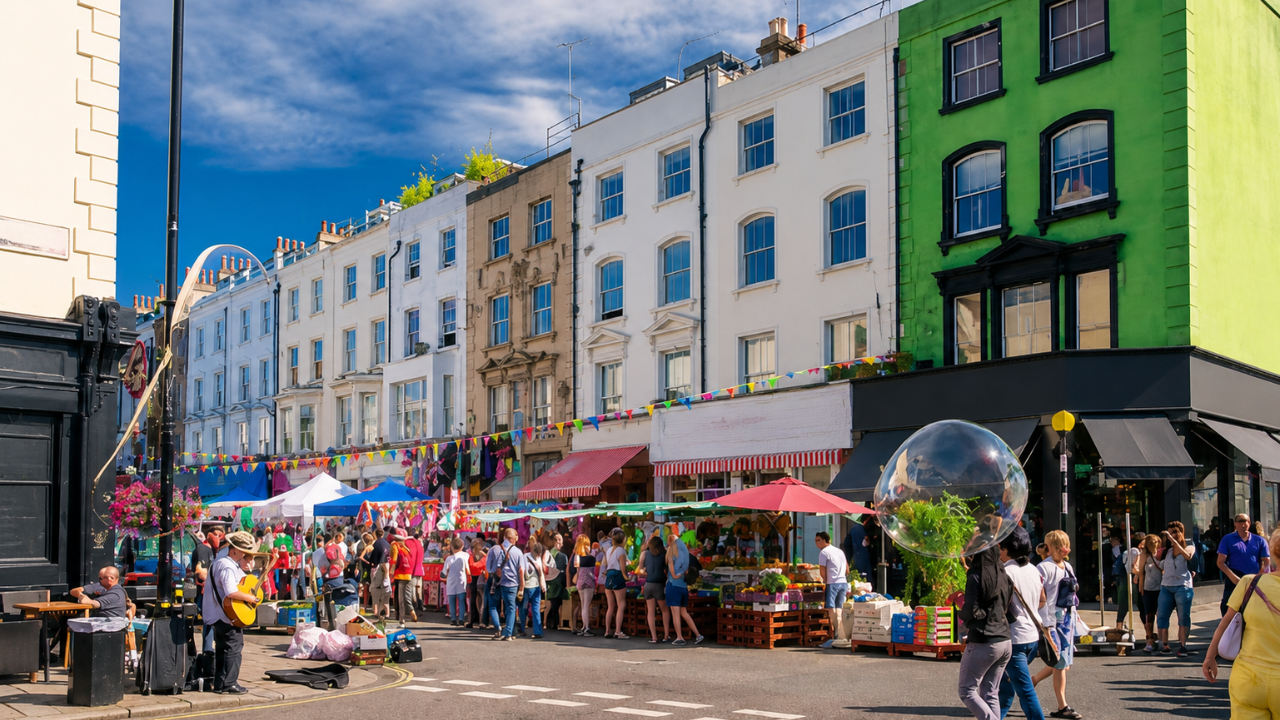
Portobello Road is one of London’s most recognisable streets, famous for its colourful houses, historic market, independent shops and lively atmosphere. Located in the heart of Notting Hill, the street attracts visitors looking for antiques, vintage clothing, street food, books, art and unique souvenirs.
What makes Portobello Road special is the way its different identities come together. During the week, it can feel like a traditional neighbourhood street, while weekends bring a much busier market scene. Its connection with Notting Hill, its distinctive architecture and its long trading history have also helped make it a popular destination for both London residents and tourists.
Whether you are planning your first visit or simply want to understand what makes the area so famous, this guide covers its history, market, shopping, food, attractions and practical visitor tips.
Who Is Portobello Road Best Known For?
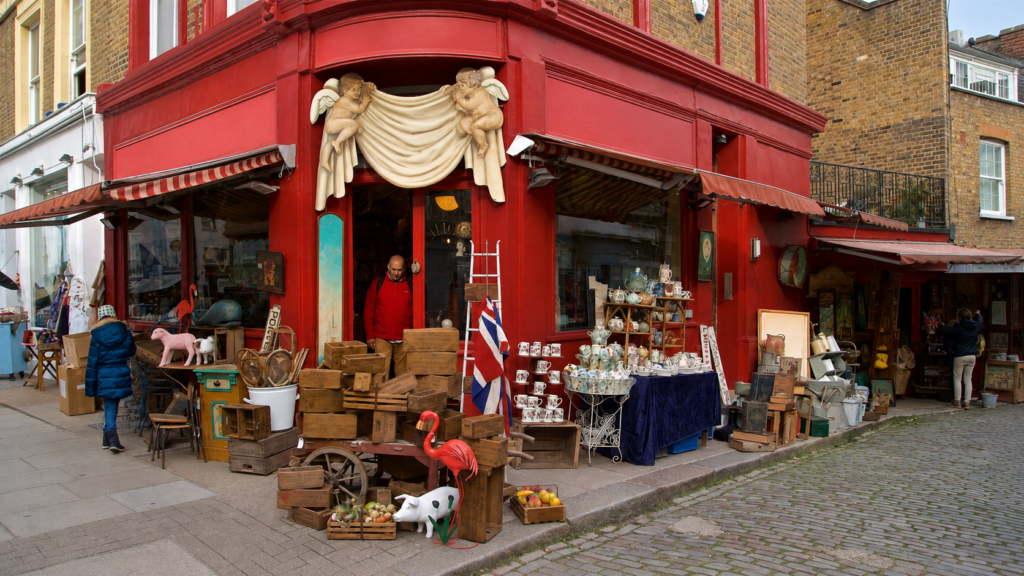
Portobello Road is best known for its famous market, particularly its antiques and vintage stalls. It is also strongly associated with the Notting Hill area and has become an important part of London’s cultural and tourist identity.
The street has developed considerably over the years. What began as a local road serving the surrounding community gradually became a busy commercial destination. Today, visitors can find a mixture of permanent businesses, market stalls, cafés, restaurants, galleries and independent retailers.
Its reputation was further strengthened by its appearances in popular culture. The wider Notting Hill area has featured in films, television programmes and music, adding to the street’s international appeal.
The History of Portobello Road
The history of Portobello Road stretches back well before its modern reputation as a tourist attraction. The area was once much more rural than it is today, with open land surrounding the growing settlements of west London.
The road originally developed under a different name before becoming associated with Portobello Farm. During the 19th century, London’s rapid expansion transformed the neighbourhood. New homes were built, businesses appeared and the road became increasingly connected to the rest of the capital.
The arrival of markets played an important role in its development. Local traders sold everyday goods, while specialist dealers gradually helped establish the area’s reputation for antiques and collectables.
Over time, Portobello Road became more than a place for local shopping. It developed a distinctive character based on independent traders and a mixture of old and new businesses.
Today, its history remains visible in the architecture, market traditions and independent character that continue to define the street.
Portobello Road Market and What to Buy
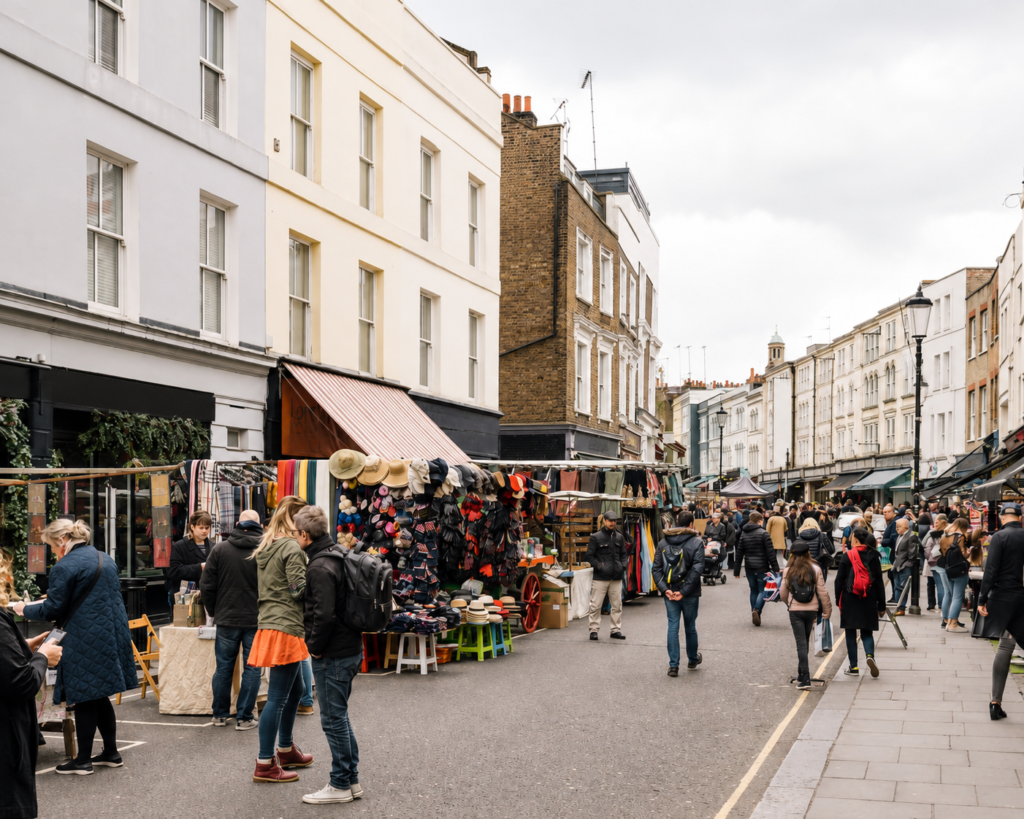
The market is the main attraction for many visitors. Portobello Road Market is particularly famous for antiques, but the range of products available is much wider.
Depending on the day and location, shoppers may discover vintage clothing, jewellery, furniture, artwork, books, records, collectables and unusual household items. Food stalls also add another dimension, with visitors able to find snacks and meals influenced by different cultures.
One of the best reasons to explore the market slowly is the possibility of finding something unexpected. Unlike a conventional shopping centre, many stalls have their own character, and stock can change frequently.
Popular purchases include:
- Antique and vintage items
- Second-hand books
- Vinyl records
- Vintage fashion
- Jewellery and accessories
- Artwork and decorative pieces
- Collectables
- Handmade goods
- Street food and snacks
If you are interested in antiques, it is worth taking your time and comparing different sellers rather than buying the first item that catches your attention.
Shopping, Food and the Notting Hill Atmosphere
Beyond the market stalls, Portobello Road offers plenty of independent shops and places to eat. Small businesses contribute greatly to the area’s character, giving visitors alternatives to the large chains found elsewhere in London.
Food is another reason people spend several hours in the neighbourhood. Cafés and restaurants offer everything from casual meals and pastries to international cuisine. Market visitors can also enjoy quick bites while exploring the stalls.
The surrounding Notting Hill streets are equally worth exploring. Colourful houses, independent boutiques and quiet residential roads create a sharp contrast with the busier sections of the market.
For photographers, the area offers plenty of visual variety. Bright façades, vintage shopfronts, market displays and historic buildings provide a distinctive London backdrop.
Things to Do Near Portobello Road
A visit to Portobello Road does not have to end when you reach the final market stall. The surrounding Notting Hill neighbourhood has several attractions and pleasant places to explore.
You can combine your visit with a walk through nearby residential streets, browse independent shops or stop at a café for a relaxed break. The area is also well suited to visitors who enjoy photography and discovering less formal attractions.
Notting Hill Gate and the surrounding neighbourhood provide convenient access to other parts of west London, making it easy to include Portobello Road in a wider sightseeing day.
If you enjoy London’s cultural history, spending extra time in the neighbourhood can also give you a better understanding of how the area developed from a largely residential district into one of the capital’s best-known destinations.
Tips for Visiting Portobello Road
Choosing the right time to visit can make a significant difference to your experience. The busiest market periods can be exciting, but they can also mean crowded pavements and slower movement.
Visitors interested mainly in antiques may prefer to plan their trip around the market’s specialist trading days. Those who simply want to experience the atmosphere can explore at a quieter time and then visit nearby cafés and shops.
A few simple tips can make the trip easier:
- Wear comfortable shoes because there is plenty of walking.
- Keep valuables secure in crowded areas.
- Take time to compare prices when buying antiques or vintage goods.
- Carry a reusable shopping bag for smaller purchases.
- Explore side streets rather than staying only on the main road.
- Allow several hours if you want to browse the market properly.
- Check individual businesses and market arrangements before travelling.
It is also worth remembering that Portobello Road is a working neighbourhood, not simply a tourist attraction. Respecting residents, businesses and local surroundings helps preserve the character that makes the area so appealing.
Frequently Asked Questions
What is Portobello Road famous for?
Portobello Road is famous for its market, antiques, vintage shopping, independent businesses and colourful Notting Hill setting.
Is Portobello Road worth visiting?
Yes. It is particularly worthwhile for visitors who enjoy markets, vintage items, antiques, food, photography and London’s historic neighbourhoods.
Where is Portobello Road?
Portobello Road is in Notting Hill in west London. It runs through a well-known part of the Royal Borough of Kensington and Chelsea.
What can you buy at Portobello Road Market?
You can find antiques, vintage clothing, jewellery, books, records, collectables, artwork, food and many other unusual items.
How long should you spend at Portobello Road?
Around two to four hours is a reasonable starting point, although antique hunters and serious shoppers may want to spend considerably longer exploring the market and surrounding streets.
Conclusion
Portobello Road combines history, shopping, food and local character in a way few London streets can match. Its famous market remains the centrepiece, but the surrounding Notting Hill neighbourhood adds independent shops, cafés, colourful architecture and plenty of opportunities for exploration.
Whether you are searching for an unusual antique, browsing vintage fashion, enjoying street food or simply taking photographs, Portobello Road offers a memorable London experience. Its long history and constantly changing market atmosphere ensure that no two visits have to feel exactly the same.
For More Info! Quickfuture
