


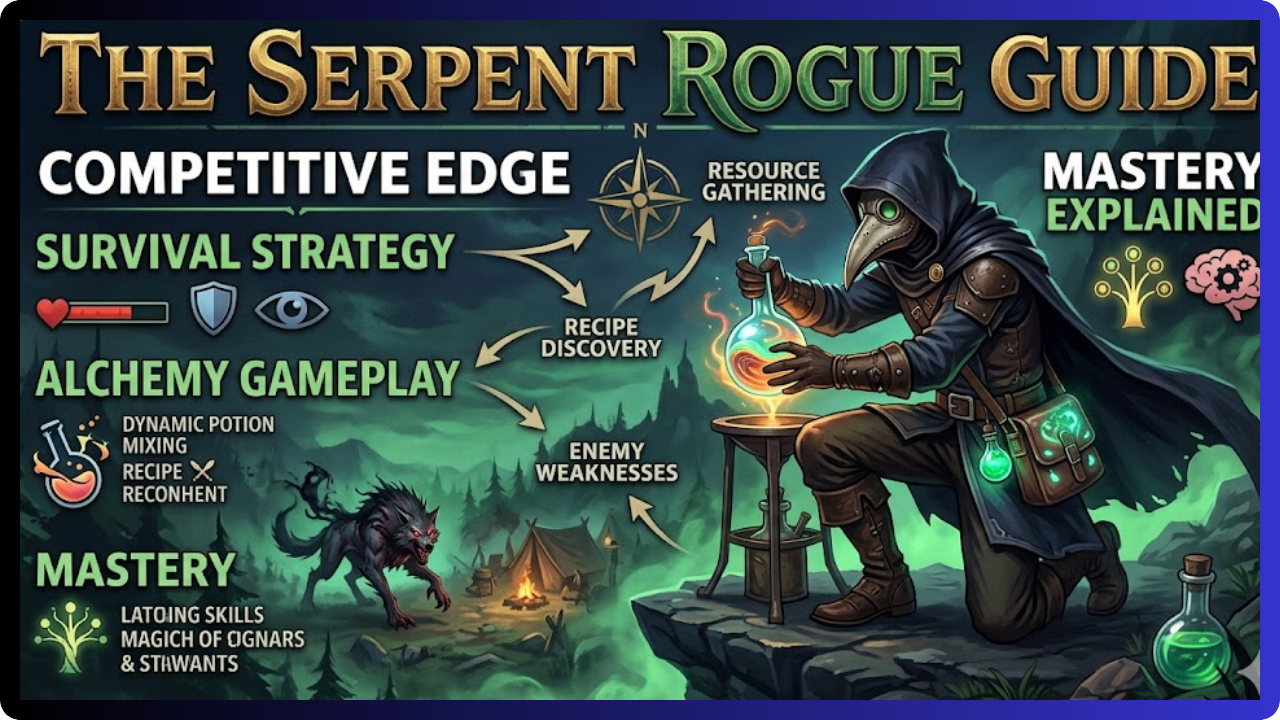
The concept of competitive edge theserpentrogue focuses on how players gain advantage through strategy, survival knowledge, and system mastery within the game. Instead of relying on fast reflexes or direct competition, the game rewards careful planning and smart decision-making. Players who understand crafting, resource control, and environmental threats gain a stronger position throughout progression. This creates a gameplay style where intelligence matters more than aggression. As a result, competitive edge theserpentrogue becomes a reflection of how well a player understands the game’s mechanics and adapts to them. The deeper the understanding, the more consistent the survival becomes in long-term gameplay. Every system in the game is interconnected, meaning one smart decision can influence multiple outcomes. Players who learn early mechanics tend to perform better in advanced stages.
Who is Competitive Edge TheSerpentRogue for Players
The idea of competitive edge theserpentrogue is mainly for players who enjoy survival-based strategy rather than fast-paced combat. It highlights the importance of learning game systems such as alchemy, corruption mechanics, and resource scarcity. Players who focus on understanding these systems gain a clear advantage over those who rush through gameplay. This approach turns every decision into a meaningful action that affects long-term survival. Another important aspect of competitive edge theserpentrogue is the shift from action-heavy gameplay to thoughtful strategy. Instead of depending on strength alone, players must think about timing, preparation, and resource usage. This creates a deeper gameplay experience where planning becomes more valuable than fighting. Players who adopt this mindset consistently perform better in difficult situations. The game rewards patience, observation, and careful execution. Over time, this builds stronger decision-making skills and survival consistency.
Core Gameplay Mechanics Behind Competitive Edge TheSerpentRogue
The core gameplay mechanics behind competitive edge theserpentrogue are built around survival systems, resource control, and adaptive decision-making. Players are constantly pushed to evaluate risk versus reward in every action they take. The game rewards patience, observation, and smart planning rather than fast reactions. Every mechanic is interconnected, meaning choices in one area directly affect another. Understanding these systems creates a strong foundation for long-term progression. Players who ignore mechanics often struggle in later stages. Mastery of systems like crafting and corruption management becomes essential. Over time, mechanics become predictable patterns that skilled players can exploit strategically. Players who fully understand core systems gain consistent survival advantages. These mechanics also shape how difficulty scales across different zones. Mastery reduces randomness and increases control over outcomes. Strong system knowledge turns gameplay into strategic planning instead of guesswork.
Importance of Survival Thinking in Gameplay
Survival thinking is a core pillar of competitive edge theserpentrogue because every decision impacts long-term progress. Players must constantly assess danger, resource availability, and environmental threats before acting. This mindset transforms gameplay into a strategic survival experience rather than simple exploration. Careful planning reduces unnecessary losses and increases efficiency. Players who adopt survival thinking tend to progress more consistently. It encourages cautious movement and smart engagement with enemies. Every step in the game can lead to reward or punishment depending on preparation. Survival awareness becomes a key skill for mastering advanced areas. It also improves decision accuracy during high-pressure situations. Players learn to prioritize survival over aggression. This mindset reduces risky mistakes during exploration. Over time, survival thinking becomes instinctive gameplay behavior.
Risk and Reward Balance in Game Progression
Risk and reward balance plays a major role in competitive edge theserpentrogue by shaping how players approach challenges. High-risk areas often offer better resources but come with greater danger. Players must decide when it is worth pushing forward or retreating. This balance creates tension and strategic depth in every decision. Taking calculated risks can lead to faster progression and rare rewards. However, reckless behavior often results in resource loss or failure. Smart players analyze situations before committing to actions. Over time, understanding risk patterns improves decision-making efficiency. Risk evaluation becomes faster with experience and repetition. Players learn to identify safe opportunities more effectively. Strategic risk-taking becomes a key survival skill. Balanced decisions improve long-term progression stability.
Role of Exploration in Player Advancement
Exploration is essential for building competitive edge theserpentrogue because it unlocks resources, knowledge, and hidden opportunities. Players who explore thoroughly gain better understanding of the world and its mechanics. Exploration often reveals safer routes and valuable items. It also helps in identifying enemy patterns and environmental hazards. Curiosity-driven gameplay leads to stronger long-term survival. Hidden areas frequently provide rare crafting materials and tools. Exploration improves map awareness and strategic planning. Players who avoid exploration often progress more slowly. It also enhances understanding of resource distribution across zones. Exploration encourages experimentation with different gameplay paths. Discoveries often change overall strategy direction. Knowledge gained through exploration improves survival efficiency.
Skill Development Through Repetition
Skill development through repetition is a key factor in competitive edge theserpentrogue because mastery comes from experience. Repeated gameplay helps players understand enemy behavior and system mechanics. Each failure becomes a learning opportunity that improves future performance. Over time, actions become more precise and efficient. Repetition builds muscle memory for combat and resource management. Players start making better decisions instinctively. This continuous learning loop strengthens overall gameplay ability. Experienced players outperform beginners through refined skills and knowledge. Repetition also improves reaction timing in combat situations. Players gradually reduce unnecessary mistakes. Consistent practice builds confidence in decision-making. Skill growth becomes noticeable through repeated gameplay sessions.
Strategy Building for Long-Term Success
Strategy building is crucial in competitive edge theserpentrogue because long-term success depends on planning ahead. Players must consider resource usage, exploration paths, and combat decisions carefully. Good strategies reduce unnecessary risks and improve efficiency. Planning ahead allows smoother progression through difficult zones. Flexible strategies help adapt to changing game conditions. Players who rely on strategy instead of luck perform more consistently. Long-term thinking ensures better resource sustainability. Strategic planning becomes the foundation of advanced gameplay success. Strong strategies also reduce pressure during difficult encounters. Players can prepare for future challenges more effectively. Adaptive planning improves survival consistency over time. Strategy becomes the core driver of long-term progression success.
Alchemy System as the Foundation of Competitive Advantage
Crafting Efficiency and Experimentation
A major part of competitive edge theserpentrogue comes from mastering the alchemy system. Players who experiment with ingredients and learn potion effects gain access to powerful survival tools. These tools can improve health, stamina, or combat performance depending on usage. Efficient crafting reduces risk and increases survival chances significantly. Understanding ingredient combinations also allows players to adapt quickly to new challenges. The more a player experiments, the more hidden possibilities they unlock. This system encourages curiosity and long-term experimentation. Mastery of crafting directly impacts survival success in harder zones. Strong alchemy knowledge often determines how far a player can progress. Experimentation also reveals hidden synergy effects between ingredients. Players gradually shift from guessing to strategic crafting. Advanced knowledge improves resource efficiency. Crafting becomes a predictive survival system over time.
Tactical Use of Potions in Gameplay
Potions are not just support items but essential tools for survival. Players who use them strategically before or during encounters gain a strong advantage. This makes competitive edge theserpentrogue heavily dependent on preparation rather than reaction. Proper timing often determines success or failure in challenging situations. Using the right potion at the right moment can completely change battle outcomes. Players who ignore potion strategy often struggle in mid to late game. Defensive and offensive potions both play important roles in survival. Strategic usage reduces resource waste and increases efficiency. Over time, potion mastery becomes a core survival skill. Potion timing can determine victory in critical fights. Advanced players pre-plan potion usage before encounters. Proper preparation reduces unexpected risks. Potion control becomes a defining survival advantage.
Resource Management and Survival Planning
Inventory Control and Resource Prioritization
Resource management plays a critical role in competitive edge theserpentrogue. Players must carefully decide what to carry and what to leave behind. Since resources are limited, every item has value and must be used wisely. Poor inventory control often leads to failure during exploration or combat. Efficient players always prioritize high-value survival items. Knowing what to discard is just as important as what to keep. Inventory decisions directly affect exploration success. Smart resource planning reduces unnecessary risk. Good management creates smoother gameplay progression. Players often reorganize inventory before major missions. Resource awareness improves survival efficiency. Proper sorting saves time during combat situations. Inventory mastery reduces long-term mistakes.
Long-Term Survival Strategy
Long-term planning is essential for maintaining competitive edge theserpentrogue throughout the game. Players who conserve resources and plan ahead for future challenges progress more smoothly. This approach reduces unnecessary risks and improves efficiency during exploration. Thinking ahead allows better preparation for difficult zones. Resource hoarding without strategy can become harmful if not balanced. Successful players always plan multiple steps ahead. Long-term thinking builds stronger survival consistency. This mindset ensures fewer setbacks during progression. Strategic foresight becomes a key advantage in later stages. Planning also improves resource sustainability. Predicting future needs reduces survival pressure. Strong preparation leads to smoother progression. Long-term thinking ensures consistent stability.
Environmental Awareness and Adaptive Gameplay
Understanding Dynamic World Changes
The world in the game constantly changes due to corruption and evolving threats, making competitive edge theserpentrogue dependent on awareness. Players must observe environmental patterns and adjust their strategy accordingly. Ignoring these changes often leads to unexpected dangers. Environmental shifts affect enemy behavior and resource availability. Awareness helps players avoid high-risk areas. Reading the environment improves survival chances significantly. Dynamic systems reward observation and patience. Players who adapt quickly gain stronger control over gameplay. Awareness becomes a core survival tool. Environmental prediction improves decision-making accuracy. Corruption zones influence exploration risk. Smart observation prevents unnecessary losses. Environmental mastery improves overall control.
Flexible Decision-Making in Real Time
Adaptability is a key factor in maintaining competitive edge theserpentrogue. Players who can quickly adjust their decisions based on the situation perform better overall. This flexibility ensures survival even in unpredictable conditions. Quick thinking often prevents unnecessary losses. Changing strategies mid-situation improves efficiency. Adaptable players recover faster from mistakes. Real-time decisions shape long-term success. Flexibility reduces failure rates in tough encounters. It strengthens overall gameplay resilience. Instant reaction to threats is often required. Players who hesitate tend to lose valuable resources. Fast adaptation improves survival consistency. Decision-making speed becomes a hidden advantage. Quick judgment improves survival outcomes. Real-time awareness increases efficiency.
Combat Strategy and Tactical Survival
Smart Engagement Choices
Combat is not always necessary, and competitive edge theserpentrogue emphasizes choosing battles wisely. Players who engage only when prepared reduce risk and increase success rates. Avoiding unnecessary fights is often the smartest strategy. Selecting battles carefully saves resources. Knowing enemy strength prevents early defeat. Tactical avoidance is sometimes the best option. Smart engagement increases survival efficiency. Timing plays a major role in combat success. Choosing when to fight is a skill itself. Overconfidence often leads to unnecessary losses. Strategic patience improves long-term survival rates. Controlled aggression is more effective than reckless attacks. Observation before combat improves success rate. Planning reduces unnecessary damage. Smart players conserve energy for key fights.
Defensive and Offensive Balance
Balancing defense and offense is crucial for maintaining competitive edge theserpentrogue. Using buffs, debuffs, and environmental advantages can turn difficult fights into manageable encounters. Strategy always outweighs raw strength in the long run. Proper balance improves survivability in extended fights. Defensive play reduces resource loss. Offensive timing increases damage efficiency. Combining both styles creates stronger results. Balanced gameplay ensures consistent performance. Switching between defense and offense creates flexibility. Players who master balance adapt better to challenges. Proper timing in combat improves success probability. This balance is essential for advanced gameplay mastery. Balance reduces risk during prolonged fights. Strategic switching improves combat control. Efficient balance increases survival stability.
Exploration and Long-Term Growth
Discovering Hidden Resources and Paths
Exploration plays a major role in competitive edge theserpentrogue because it reveals valuable resources and safer routes. Players who explore thoroughly gain more knowledge and better survival options. This reduces risk during future gameplay. Hidden areas often contain rare rewards. Exploration improves map understanding. Knowledge of terrain increases efficiency. Safe paths reduce unnecessary danger. Discovery is key to progression success. Exploration also improves strategic positioning. Hidden loot often changes survival outcomes. Knowing terrain shortcuts improves efficiency. Exploration rewards curiosity and risk-taking behavior. Exploration reveals hidden survival advantages. Map mastery improves long-term planning. Exploration reduces unpredictable threats. Strategic exploration increases efficiency.
Learning Through Experience and Mistakes
Every mistake contributes to improving competitive edge theserpentrogue. Players learn from failures and adjust their strategies accordingly. Over time, this creates stronger decision-making skills and better overall performance. Failure becomes part of learning progression. Experience improves reaction quality. Mistakes help refine strategy. Learning cycles build mastery. Improvement comes from repetition and adaptation. Every loss teaches valuable survival lessons. Players gradually build better instincts. Experience shapes smarter decision-making over time. Growth is directly tied to repeated gameplay exposure. Mistakes improve future predictions. Learning strengthens adaptability. Repetition builds mastery. Continuous improvement ensures long-term success.
Advanced Progression and Endgame Strategy
Mastering Late-Game Survival Systems
As players progress deeper into the game, competitive edge theserpentrogue becomes more dependent on mastering advanced systems. Corruption levels increase, enemies become more dangerous, and resource scarcity becomes more intense. Players who understand late-game mechanics can survive longer and maintain control over difficult zones. This stage requires a combination of alchemy mastery, resource discipline, and tactical awareness. Without proper preparation, progression becomes extremely difficult. Late-game survival demands precise planning and execution. Enemy scaling forces smarter decisions. Resource efficiency becomes critical. Advanced understanding separates skilled players from beginners. Endgame survival requires full system mastery. Mistakes become more punishing. Strategic preparation is essential. Survival depends on complete awareness.
Optimizing Efficiency for Maximum Progress
In the advanced stages, competitive edge theserpentrogue is defined by efficiency rather than exploration alone. Players must optimize every action, from crafting to combat engagement. Wasting resources or time can significantly impact survival chances. Efficient routing, smart inventory use, and calculated risks become essential tools for success. This creates a high-level gameplay loop where precision and planning dominate. Optimization improves long-term stability. Every action must have purpose. Efficiency reduces failure rates. Mastery comes from controlled execution. Advanced optimization reduces downtime. Strategic planning improves outcomes. Efficiency ensures survival consistency. Precision becomes the final skill.
FAQs
What does competitive edge theserpentrogue mean?
It refers to gaining advantage through strategy, survival knowledge, and system mastery.
Is combat the main focus of competitive edge theserpentrogue?
No, strategy and preparation are more important than direct combat in most situations.
How important is alchemy in competitive edge theserpentrogue?
Alchemy is essential because it provides healing, buffs, and survival tools.
Can beginners build competitive edge theserpentrogue easily?
Yes, with patience and learning, beginners can gradually improve their survival strategy.
What is the most important skill for competitive edge theserpentrogue?
Adaptability is the most important skill for surviving changing game conditions.
Final Thoughts
Competitive edge theserpentrogue is defined by how well a player understands systems, manages resources, and adapts to changing environments. The game rewards careful planning, experimentation, and long-term thinking over fast reactions. Players who invest time in mastering alchemy, survival mechanics, and exploration strategies consistently gain a stronger advantage. Over time, this creates a gameplay experience where knowledge becomes the true source of power and success. Strong decision-making builds consistent progression across all stages of the game. Mastery comes from patience and repeated learning. Every system connects to survival outcomes. Adaptability ensures long-term success. Strategic thinking improves overall gameplay control. Knowledge becomes the strongest advantage. True mastery comes from experience and planning. Long-term survival depends on consistent improvement. Every decision shapes future progression. Players who stay patient always outperform rushed gameplay.
