


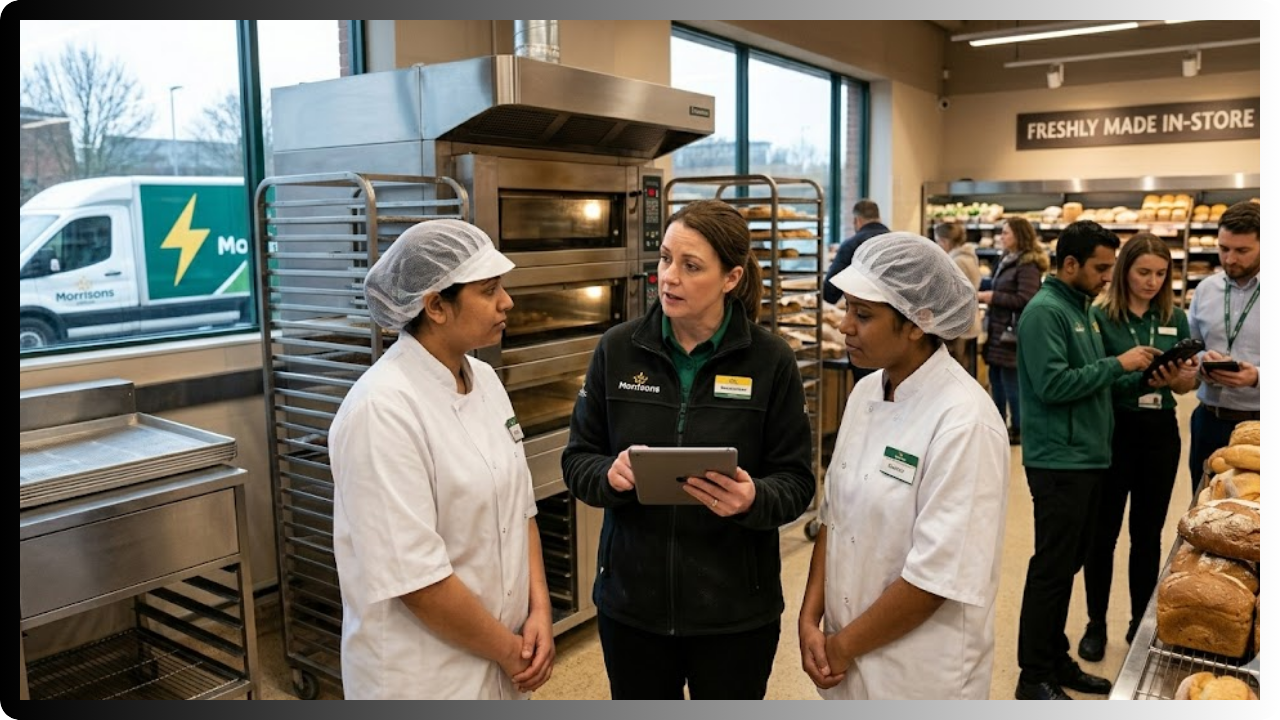
The morrisons rathbones bakery closure has become a major development in the UK food manufacturing industry as Morrisons confirmed the shutdown of its long-standing Rathbones Bakery site in Wakefield. The facility has been an important part of the company’s supply chain for many years, producing a wide range of baked goods for supermarkets. Around 115 jobs are expected to be affected, making the decision highly significant for workers and the local community. The morrisons rathbones bakery closure reflects wider restructuring in the retail and bakery manufacturing sector. It also highlights ongoing financial and operational pressures faced by large-scale food production sites in the UK. The closure also marks a shift in how supermarkets manage internal production facilities. Many industry observers see it as part of a long-term cost reduction strategy. It further signals changes in supply chain efficiency priorities.
Who Is Rathbones Bakery?
Rathbones Bakery is a long-established UK bakery manufacturer that became part of Morrisons’ supply chain after its acquisition in 2005. The company has roots going back more than a century and built its reputation on producing high-volume bakery products for supermarkets across the country. Over time, it evolved from traditional bread production into a specialist supplier of items such as crumpets, pancakes, naan breads, and other packaged baked goods. The morrisons rathbones bakery closure marks the end of its operational role within Morrisons’ manufacturing network. Despite its long history, the business has faced increasing financial and operational pressures in recent years. It once played a key role in ensuring steady bakery supply across the UK. The integration helped modernize production systems for a time. However, long-term sustainability became difficult under rising costs.
Economic Impact of Morrisons Rathbones Bakery Closure
The morrisons rathbones bakery closure has created significant economic effects in the Wakefield region due to the loss of a long-standing industrial employer. Local economic activity is expected to decline as household incomes are reduced and spending power weakens in nearby communities. Businesses that relied on the bakery workforce may also experience reduced demand for goods and services. The morrisons rathbones bakery closure further contributes to uncertainty in the regional manufacturing sector. Reduced industrial output can also impact local supply chains and transport services. Over time, this may influence investment interest in the area. The broader economic ripple effect could take years to fully recover.
Supply Chain Restructuring Strategy Behind the Closure
The morrisons rathbones bakery closure is closely connected to Morrisons’ wider strategy of restructuring its supply chain to improve efficiency and reduce operational costs. The company is shifting away from centralized production models toward more flexible sourcing and external supplier partnerships. This allows faster adaptation to market demand and reduces long-term financial risk. The morrisons rathbones bakery closure reflects a growing industry trend toward leaner and more responsive logistics systems. By outsourcing production, retailers can improve cost control and reduce dependency on single large facilities. This restructuring supports long-term business sustainability. It also helps streamline distribution networks across the UK.
Role of Automation and Technology in Bakery Production
Automation and modern technology have transformed bakery production across the UK, increasing efficiency and reducing manual labor requirements. Advanced machinery now handles mixing, baking, packaging, and quality control with high precision. The morrisons rathbones bakery closure highlights how older facilities may struggle to compete with highly automated production plants. Digital systems also help manage inventory and improve supply chain visibility. Robotics reduces production errors and increases consistency. These technological advancements lower operational costs over time. However, they also reduce the need for large traditional workforce structures. As a result, many older bakeries face challenges in remaining competitive.
Employee Retraining and Skill Development Opportunities
Following the morrisons rathbones bakery closure, employee retraining and skill development become essential for helping affected workers transition into new roles. Many employees may seek opportunities in other food manufacturing, logistics, or industrial sectors within the region. The morrisons rathbones bakery closure highlights the importance of adaptable and transferable skills in today’s job market. Training programs can help workers adjust to automated and technology-driven environments. Government and private initiatives may support reskilling and career transition services. Digital literacy and technical skills are increasingly important for future employment. Career counseling and job placement support can also assist affected workers. Long-term employability depends on continuous learning and adaptability.
Effect on UK Supermarket Bakery Pricing and Supply
The morrisons rathbones bakery closure may influence supermarket bakery pricing and supply chains across the UK, although the overall impact is expected to remain manageable. Production is likely to be redistributed to alternative suppliers, which may temporarily adjust cost structures. Retailers may face short-term logistical changes as sourcing networks are reorganized. The morrisons rathbones bakery closure could increase reliance on external bakery manufacturers. Supply chain diversification helps ensure product availability and reduces dependency on a single facility. Pricing stability will depend on supplier efficiency and competition. Supermarkets may absorb minor cost changes to remain competitive in the market. Overall supply is expected to remain stable despite structural adjustments.
Long-Term Future of Industrial Bakeries in the UK
The morrisons rathbones bakery closure reflects a broader transformation in the UK bakery manufacturing industry, where traditional large-scale bakeries are increasingly under pressure. Rising costs, technological advancement, and changing retail strategies are driving structural change across the sector. The morrisons rathbones bakery closure demonstrates how even long-established facilities must adapt to survive. Future bakeries are likely to be smaller, more automated, and more regionally distributed. Sustainability and efficiency will continue to shape production models. Industry consolidation is expected to increase over time as companies optimize operations. Investment in automation and smart manufacturing will be critical for long-term survival. Businesses that fail to modernize may face similar closures in the future.
History of Rathbones Bakery and Its Role
Early Origins and Growth
Rathbones Bakery has a long heritage of more than 100 years and originally operated as an independent bakery before becoming part of Morrisons in 2005. The site developed a strong reputation for supplying consistent bakery products to supermarkets across the UK. Over time, it expanded production capacity and modernized its operations to meet retail demand. The facility became a key production hub for baked goods distribution. It also invested in automation to increase efficiency. Despite improvements, rising operational costs continued to challenge profitability. The morrisons rathbones bakery closure reflects how even established sites struggle under modern economic pressure. It also contributed significantly to regional employment for decades. Continuous upgrades were introduced to maintain quality standards. The site became an important part of national supply chains. However, competitive pressures gradually increased. Market shifts reduced long-term viability. Operational complexity continued to rise over time.
Product Evolution Over Time
The bakery gradually shifted from traditional bread production to more specialized items such as crumpets, pancakes, naan breads, and other packaged baked goods. This change reflected evolving consumer preferences and supermarket requirements. The morrisons rathbones bakery closure marks the end of this long production journey in Wakefield. Product diversification helped extend the site’s operational life. However, competition from external suppliers increased pressure on margins. Demand patterns also became more fragmented over time. Ultimately, efficiency challenges outweighed production benefits. The bakery introduced new product lines to stay competitive. Packaging and processing improvements were implemented. Despite this, profitability continued to decline. Supply chain complexity increased significantly. The site struggled to match modern production models. Eventually, strategic viability weakened.
Reasons Behind the Morrisons Rathbones Bakery Closure
Rising Costs and Financial Pressure
The morrisons rathbones bakery closure is strongly linked to rising operational costs including energy, ingredients, and logistics. Inflation has significantly increased production expenses, reducing overall profitability for large-scale bakery sites. Energy price volatility made long-term planning difficult. Supply chain disruptions also added additional costs. Labour expenses increased due to inflationary wage pressures. These combined factors created unsustainable financial strain. Maintenance costs for aging equipment also increased. Transportation expenses added further burden. Raw material price fluctuations created instability. Profit margins steadily declined. Financial sustainability became increasingly difficult. The site struggled to remain competitive.
Market and Strategic Changes
Changing consumer habits and increased competition in the bakery sector have also reduced demand for centralized production. Morrisons has been restructuring its supply chain to improve efficiency and reduce long-term costs, making consolidation necessary. Retailers are increasingly relying on flexible suppliers. Smaller production models are becoming more efficient. Supermarket competition has intensified pricing pressure. The morrisons rathbones bakery closure reflects this broader strategic shift. Online grocery growth has also changed distribution patterns. Retailers now prioritize speed and flexibility. Centralized manufacturing is less efficient. Outsourced production models are growing. Strategic consolidation has become necessary. Efficiency has become the main priority.
Impact on Employees and Local Community
Job Losses and Workforce Impact
The morrisons rathbones bakery closure is expected to affect around 115 employees, many of whom have worked at the site for many years. This creates uncertainty for families who depended on stable employment at the bakery. Long-term workers face significant career disruption. Some may need to retrain for new industries. Emotional impact on staff is also considerable. Redundancy processes add further uncertainty. Pension considerations may also be affected. Skills developed over decades may not easily transfer. Job market competition increases pressure on affected workers. Some employees may relocate for new opportunities. Workplace identity loss is a major concern. The closure represents a major life transition. Community support becomes important during transition. Financial planning becomes critical for affected families.
Community and Economic Effects
The Wakefield area is also impacted as the bakery has been a long-standing employer in the region. Local businesses and suppliers connected to the facility may also experience reduced activity. The morrisons rathbones bakery closure therefore extends beyond the company itself into the wider community. Reduced spending may affect nearby services. Transport and logistics partners may also be impacted. Local economic confidence could weaken. Small businesses may face reduced demand. Housing-related economic activity may also decline. Community identity linked to the bakery may diminish. Regional employment levels could be affected. Long-term investment confidence may weaken. Public services may feel indirect pressure. The closure represents a wider regional shift.
Industry Challenges and Financial Pressure
Rising Production and Energy Costs
The UK bakery industry has faced continuous pressure from rising energy bills and raw material costs. These financial challenges have directly contributed to the morrisons rathbones bakery closure and similar restructuring decisions across the sector. Energy-intensive production is especially affected. Supply chain inflation has reduced margins. Competition limits pricing flexibility. Equipment maintenance costs have increased. Sustainability requirements add additional expense. Transportation and storage costs continue to rise. Smaller competitors often operate more efficiently. Large-scale factories face structural disadvantages. Inflation reduces consumer purchasing power. Long-term contracts become harder to maintain. Industry-wide pressure continues to grow.
Shift in Retail Supply Chains
Supermarkets are increasingly moving toward flexible and outsourced production models. This shift reduces reliance on large centralized bakeries and increases efficiency. The morrisons rathbones bakery closure reflects this wider industry transformation. Outsourcing reduces operational risk. Smaller suppliers can adapt faster. Retailers benefit from cost control. Traditional bakeries struggle to compete. Technology improves supply chain management. Regional sourcing enhances responsiveness. Demand forecasting has improved. Centralized production is declining. Agile supply chains are preferred. Digital systems are replacing older models. Industry structure is rapidly evolving.
Future Outlook After Morrisons Rathbones Bakery Closure
Redistribution of Production
After the morrisons rathbones bakery closure, production is expected to be moved to other facilities or external suppliers. This ensures continued supply of bakery products despite the shutdown of the Wakefield site. Logistics networks will be adjusted. Existing suppliers will absorb demand. Distribution systems will be restructured. Supply continuity remains a priority. Alternative manufacturing sites will increase output. Coordination between suppliers will improve. Product availability is expected to remain stable. Cost efficiency will guide decisions. Transition will be gradual. Customers are expected to see minimal disruption. Supply chain resilience remains important.
Future of Morrisons Bakery Operations
Morrisons in-store bakeries will continue operating normally and are not directly affected. The company is expected to focus on more efficient production networks moving forward, reducing dependence on large manufacturing sites. In-store baking offers flexibility. Customer demand remains stable. Decentralized production reduces risk. The strategy supports long-term sustainability. Fresh bakery offerings remain a key retail feature. Local baking improves customer experience. Operational costs are lower in stores. Staffing models are more flexible. Retail differentiation is strengthened. Customer engagement is enhanced. The model aligns with modern retail trends.
Support Measures and Employee Transition
Redundancy Support and Consultation
Following the morrisons rathbones bakery closure, affected employees are expected to go through consultation processes. Support measures such as redundancy packages and career transition assistance are typically provided during such closures. Employee guidance programs may be introduced. Financial compensation is expected. Job placement support may be offered. Consultation aims to ease transition. Union discussions may take place. HR services will assist staff. Training options may be provided. Transition timelines will be clearly communicated. Emotional support may also be available. Career counselling services may be introduced. External agencies may support job searches.
Long-Term Employment Outlook
Workers may seek opportunities in other manufacturing or food production facilities in the region. The closure highlights the importance of adaptability in a changing industrial job market. Skills transferability becomes important. Local job markets may absorb some workers. Training programs could support transition. The sector remains competitive. Logistics and food manufacturing remain active industries. Some workers may shift to related sectors. Upskilling is essential for career continuity. Regional employment demand may vary. Workforce mobility is increasingly important. Automation may change job availability. Flexible employment pathways will grow in importance.
FAQs
Why did the Morrisons Rathbones Bakery closure happen?
The closure happened due to rising costs, financial losses, and restructuring of Morrisons’ supply chain.
How many jobs are affected by the closure?
Around 115 employees are expected to be impacted by the Morrisons Rathbones Bakery closure.
Will Morrisons stop selling bakery products?
No, Morrisons will continue selling bakery products through other suppliers and in-store bakeries.
What will happen to the Wakefield site?
The site will be closed and production will be moved to other facilities or external partners.
Is this part of a bigger industry trend?
Yes, many UK food manufacturers are restructuring due to cost pressures and changing retail demand.
Final Thought
The morrisons rathbones bakery closure represents a major turning point in the UK bakery manufacturing industry driven by rising costs, structural changes in retail supply chains, and long-term efficiency pressures. It highlights how even long-established industrial sites are vulnerable to modern economic challenges and shifting business models. The closure reflects a broader move toward flexible, outsourced, and decentralised production systems across the food sector. While the immediate impact is significant for employees and the Wakefield community, the long-term trend is reshaping how supermarkets manage supply chains. It also demonstrates the increasing importance of cost efficiency and adaptability in modern manufacturing. The decision may influence future restructuring across similar facilities in the UK. Ultimately, it marks both an end of an era and the beginning of a more streamlined industrial approach.
